

Πρόσφατες Δημοσιεύσεις
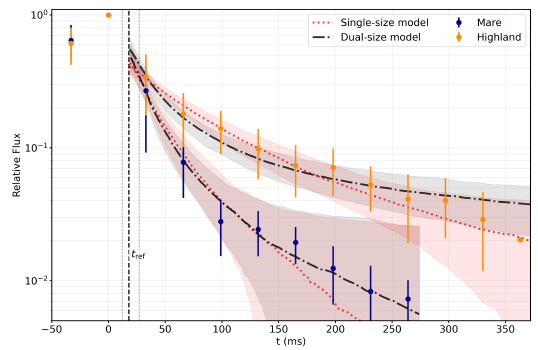
Mare versus highland lunar impact flash light curve dichotomy
We performed a comprehensive analysis of lunar impact flash (LIF) light curve shapes and their dependence on the lunar terrain, using the large sample of LIFs detected by NELIOTA over the last 9 years. We classified 124 multi-frame light curves into mare, highland, and 'border' regions. Subsequently, we derived analytical expressions for single-size and dual-size ejecta cooling models, which we fitted to the observational data to estimate their physical properties. While impacts on the two terrains yield similar peak magnitude distributions, their decay behaviour differs significantly; highland LIFs exhibit a shallower and longer-lasting decay (τ= 0:11+0:08/-0:05 s) compared to mare flashes (τ= 0:038+0:032/-0:018 s). The dual-size model suggests this extended duration is primarily driven by the coarse particles of the ejecta. The profile and duration of the LIF light curves represent the initial stages of the impact cratering process. The observed dichotomy between highland and mare LIFs demonstrates that the initial stages of the impact cratering process are fundamentally dependent on lunar lithology.
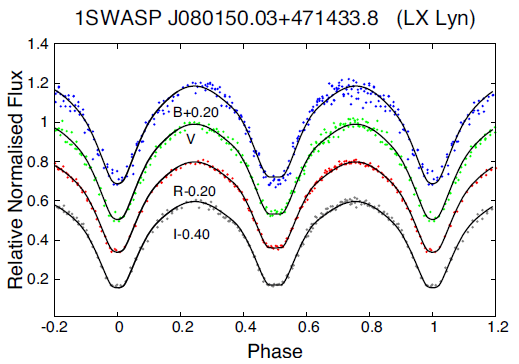
CoBiToM Project — II: Evolution of contact binary systems close to the orbital period cut-off
Ultra-short orbital period contact binaries (Porb
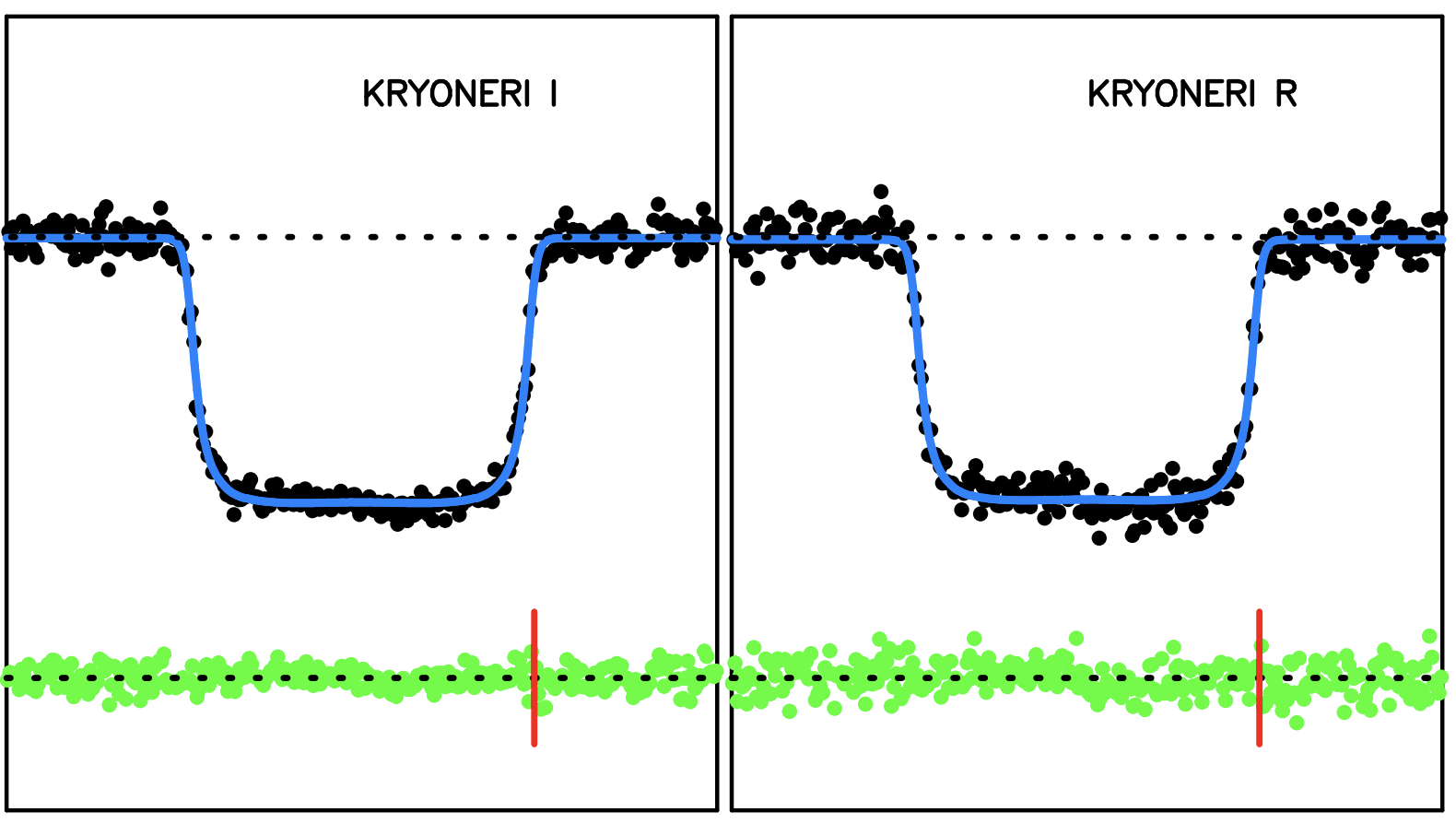
Constraints on the structure and seasonal variations of Triton’s atmosphere from the 5 October 2017 stellar occultation and previous observations
A stellar occultation by Neptune's main satellite, Triton, was observed on 5 October 2017 from Europe, North Africa, and the USA. We derived 90 light curves from this event, 42 of which yielded a central flash detection. We aimed at constraining Triton's atmospheric structure and the seasonal variations of its atmospheric pressure since the Voyager 2 epoch (1989). We also derived the shape of the lower atmosphere from central flash analysis.
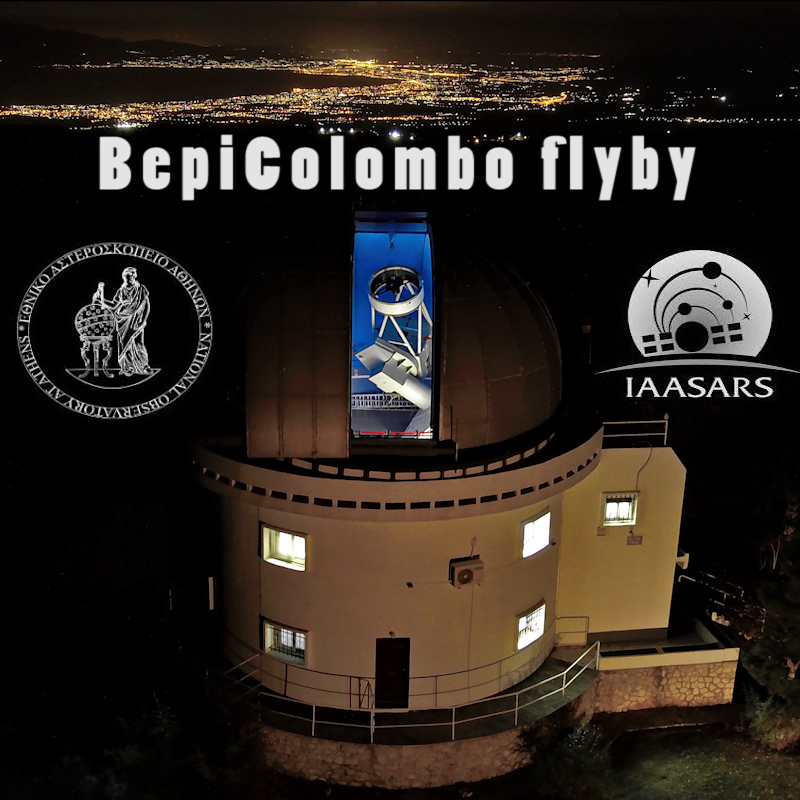
Optical observations of the BepiColombo spacecraft as a proxy for a potential threatening asteroid
We present the results of our ground-based astrometric observation campaign of BepiColombo during its Earth fly-by on 2020 April 10. The observational circumstances induced by the fly-by geometry made this event an excellent proxy for a close fly-by or an imminent impact of a natural body with a diameter of a few meters, with the added benefit of having a ground-truth orbit (from radio tracking) to compare with our purely ...
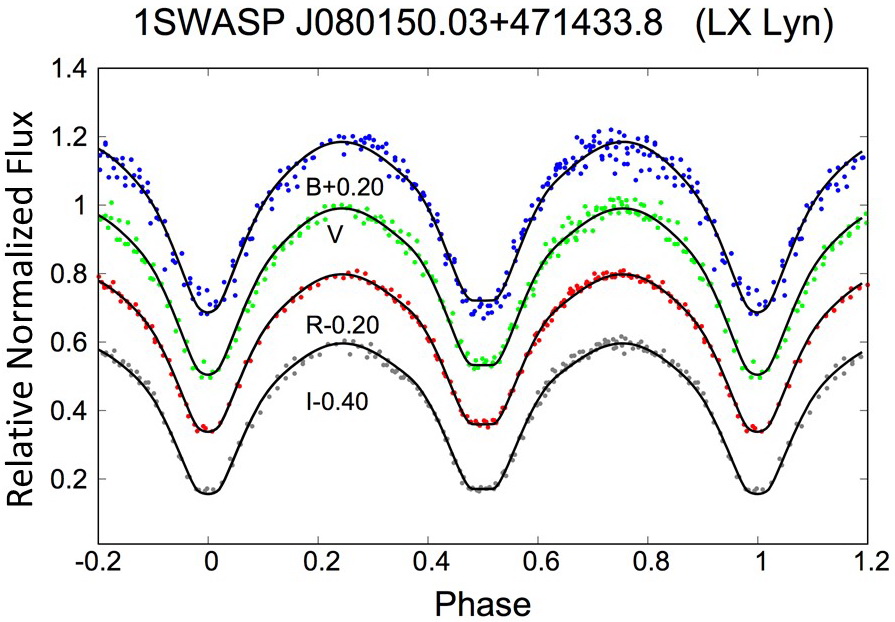
CoBiToM project – I. Contact binaries towards merging
Binary and multiple stellar systems are numerous in our solar neighbourhood with 80 per cent of the solar-type stars being members of systems with high order multiplicity. The Contact Binaries Towards Merging (CoBiToM) Project is a programme that focuses on contact binaries and multiple stellar systems, as a key for understanding stellar nature. The goal is to investigate stellar coalescence and merging processes, as the final state of stellar evolution of low-mass contact binary systems. Obtaining observational data of approximately 100 eclipsing binaries and multiple systems and more than 400 archival systems, the programme aspires to give insights for their physical and orbital parameters and their temporal variations, e.g. the orbital period ...

Discovery of five new eclipsing systems of W UMa type
The present work contains light curve, spectroscopic, and asteroseismic analyses for KIC 04851217 and KIC 10686876. These systems are detached eclipsing binaries hosting a pulsating component of δ Scuti type and have been observed with the unprecedented accuracy of the Kepler space telescope. Using ground-based spectroscopic observations, the spectral types of the primary components of the systems were estimated as A6V and A5V for KIC 04851217 and KIC 10686876, respectively, with an uncertainty of one subclass. The present spectral classification, together with literature radial velocity curves, were used to model the light curves of the systems and, therefore, to calculate the absolute parameters of their ...
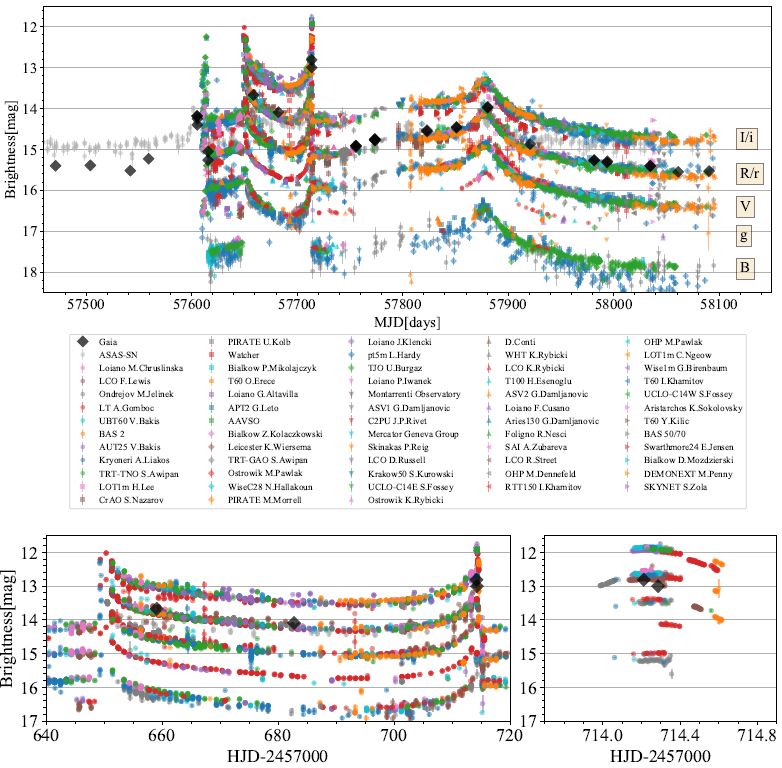
Full orbital solution for the binary system in the northern Galactic disc microlensing event Gaia16aye
Binary and multiple stellar systems are numerous in our solar neighbourhood with 80 per cent of the solar-type stars being members of systems with high order multiplicity. The Contact Binaries Towards Merging (CoBiToM) Project is a programme that focuses on contact binaries and multiple stellar systems, as a key for understanding stellar nature. The goal is to investigate stellar coalescence and merging processes, as the final state of stellar evolution of low-mass contact binary systems. Obtaining observational data of approximately 100 eclipsing binaries and multiple systems and more than 400 archival systems, the programme aspires to give insights for their physical and orbital parameters and their temporal variations, e.g. the orbital period ...